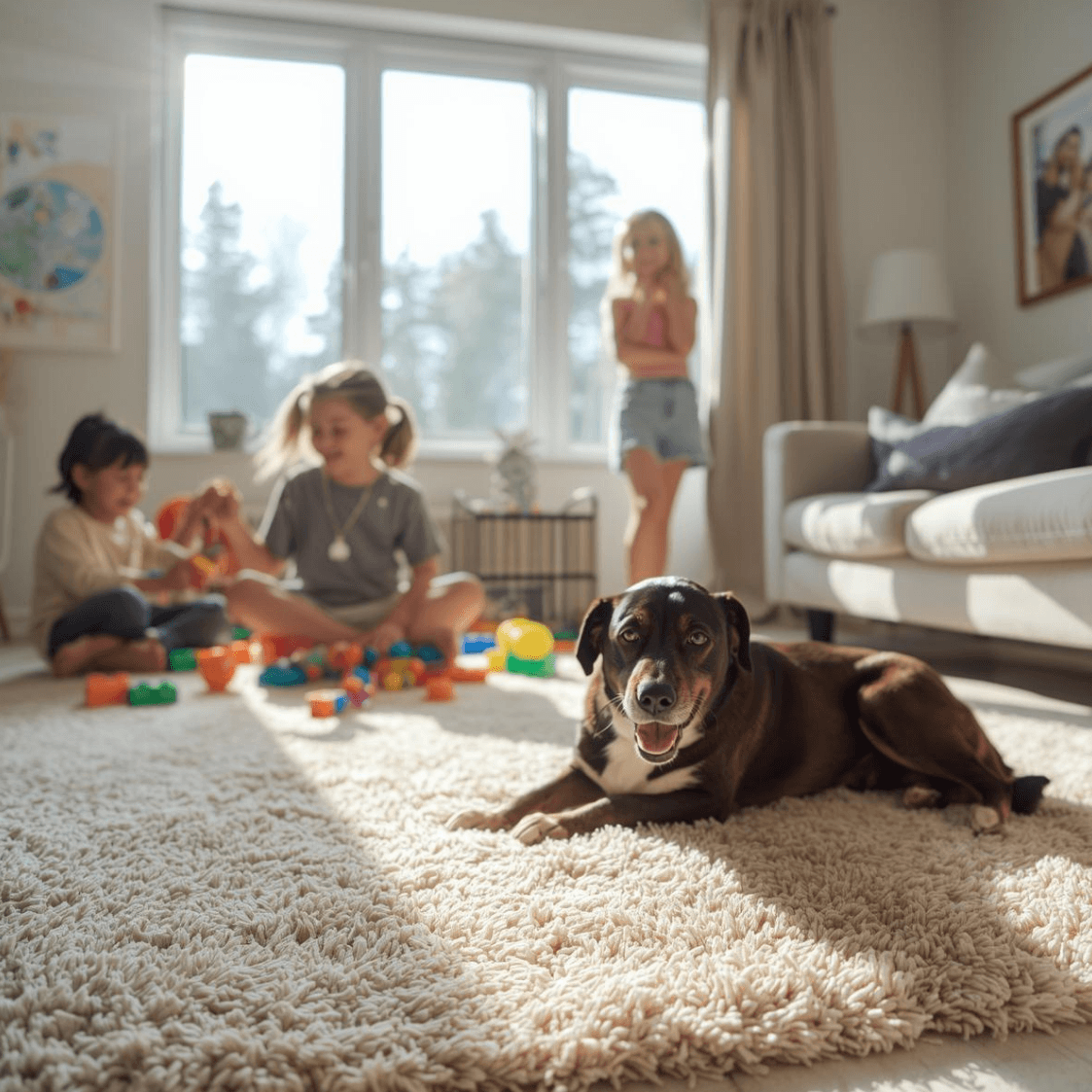
You cleaned the spot. You scrubbed it, you sprayed it, you let it dry, and for a week or two everything seemed fine. Then one muggy afternoon you walk in the door and there it is again, that sharp ammonia smell hanging in the room. If you have a dog or a cat, you have probably lived this cycle more than once. The frustrating part is that you did not do anything wrong on the surface. The smell keeps coming back because the part of the mess that actually causes the odor never got touched.
The odor is not where you think it is
A pet accident does not stay on top of the carpet. The liquid you blot up is a small fraction of what landed. The rest travels down through the fibers, soaks into the carpet backing, and settles into the pad underneath. A spot that looks like a small ring on the surface can be the size of a dinner plate down in the pad. When you clean only the surface, you have left the bulk of the urine sitting there to dry on its own.
Once it dries, the chemistry works against you. Urine leaves behind salts and crystals as the moisture evaporates. Those crystals are hygroscopic, which is a fancy way of saying they pull water out of the air around them. So every time the humidity climbs, the crystals go damp again and release that smell all over. That is why a spot you handled back in winter suddenly gets loud in June. Out here near Percy Priest Lake, our Middle Tennessee summers run humid for months at a stretch, and that gives old urine plenty of chances to reactivate.
Why your pet keeps going back to the same corner
There is a second problem with leftover urine, and it is one a lot of people miss. Those dried crystals are not just a smell to you. They are a signal to your animal. A dog or cat has a nose far more sensitive than ours, and long after you have stopped noticing the spot, they can still find it. To them, that lingering scent reads as an approved bathroom.
This is the real reason behind repeat accidents in one location. It is rarely a training failure. It is almost always old urine still living in the pad, quietly inviting the pet back. Break that cycle by removing the source, and the behavior usually corrects itself.
What works on a fresh accident
When the spot is new, speed is the thing that matters most. The faster you act, the less ends up soaking into the pad.
- Blot, do not rub. Fold a thick towel, press down hard, and lift straight up. Put your weight into it. Rubbing pushes the urine deeper and spreads the stain wider.
- Rinse with a little cool water, then blot again. Plain water dilutes what is near the surface so you can lift more of it.
- Keep heat far away from it. Skip the hot water and the steam machine. Heat can set the proteins in the stain and lock the odor in permanently.
- Stay away from ammonia-based cleaners. Urine already contains ammonia, and that scent tells your pet to come back to the same spot.
For a small, fresh accident, a quality enzyme cleaner from the pet store can genuinely help. Enzymes break down the compounds that cause the smell instead of covering them up. The catch is that a spray bottle rarely soaks as deep as the urine did. Whatever the cleaner cannot reach keeps right on smelling.
When a store-bought fix is not going to cut it
Older stains, repeat-offender corners, and the spot your cat decided was a second litter box are past the point a bottle can fix. The urine sitting in the pad has to be reached and flushed, and you cannot do that from the top with a towel and a spray.
That is exactly what our odor and stain removal service handles. We treat the problem where it actually lives, breaking down the urine crystals down in the pad rather than masking them on the surface. We also use a low-moisture process, so we are not pouring water into your floors and giving mildew a head start in our damp climate. Carpets are usually dry within about an hour after we finish.
A lot of people call us already braced to hear they need to rip the carpet out. In most cases, they do not. Reaching the source and neutralizing it solves what looked like a full replacement.
A couple of habits that save you trouble
If you have a pet that is prone to accidents, a few small things cut down on the work later. Keep an old towel and a spray bottle of plain water near the usual problem area so you can hit a fresh spot fast. Pay attention to repeat hits in one location, because that is your sign there is leftover odor still drawing the animal back. And once a deep spot has been properly treated, that pull goes away, which often ends the cycle on its own.
The bottom line
Pets are family, and accidents are part of the deal. They do not have to leave you with a smell that returns every humid week. Move fast on fresh spots, blot instead of rub, and keep heat and ammonia out of the picture. For the older spots that have already settled into the pad, let us pull the odor out at the source so it is actually gone.
Tired of fighting the same spot? Call Safe-Dry of La Vergne at 615-930-0865 or schedule online, and we will take care of it the right way.